
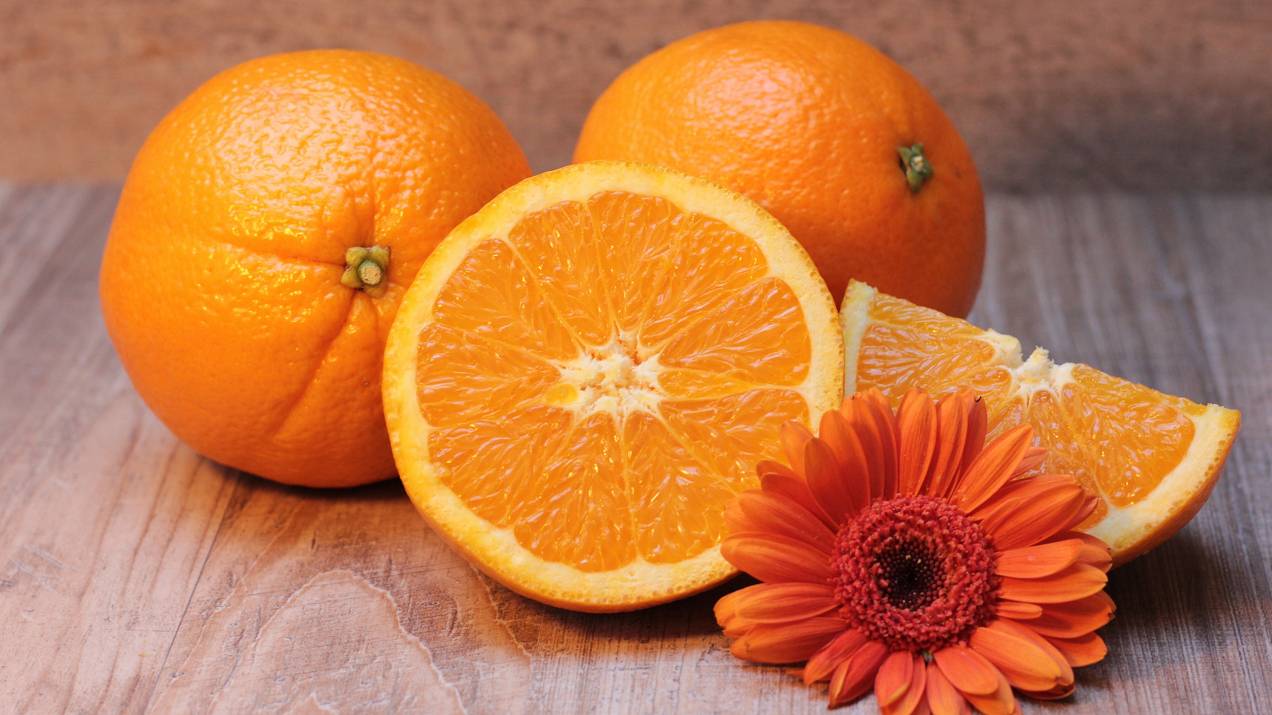
Oranges from Colombia: Why Importers Choose Colombian Tropical Fruit
In the fruit wholesale markets of Miami, Amsterdam, and Toronto, Colombia is appearing with increasing frequency on the lists of preferred origins for fresh oranges. This is no coincidence. Colombia's unique geography—a country that straddles the equator, with access to three mountain ranges featuring thermal floors between 800 and 2,000 meters above sea level, and boasting more than 300 days of sunshine per year in its main production areas—creates conditions that very few countries in the world can replicate for growing high-quality citrus.
For the wholesale importer, the supermarket chain buyer, or the trader looking to diversify their supply sources, Colombia offers something that traditional major orange exporters—Spain, South Africa, Egypt—cannot offer to the same extent: near-continuous availability throughout the year thanks to the multiplicity of harvest zones, without the rigid seasonality that characterizes countries with a single cold season.
This guide explains in detail what makes the Colombian orange an attractive product for the international importer, which are the main producing regions, what varieties are grown, and what export conditions a buyer can expect when taking an interest in this origin for the first time.
Colombia as an Origin for Fresh Oranges: Data That Matters
Colombia is one of the main producers of citrus in South America. The orange is the most cultivated citrus in the country, with production distributed across several departments covering different altitude and climate ranges. This geographic distribution is precisely Colombia's most important competitive advantage over other origins: production is not concentrated in a single region or a single season, allowing fruit to be available practically all year round.
| Data | Colombia | Spain (reference) | South Africa (reference) |
|---|---|---|---|
| Annual harvest seasons | Near-continuous (peaks in two periods) | October – May (one season) | June – October (one season) |
| Cultivation altitude range | 800 – 2,000 masl | 0 – 600 masl | 0 – 1,200 masl |
| Average cultivation temperature | 18°C – 26°C | 10°C – 30°C (seasonal) | 12°C – 28°C (seasonal) |
| Main variety exported | Valencia, Tangelo, common orange | Navel, Valencia | Navel, Valencia |
| Distance to Miami (sea days) | 5 – 8 days | 14 – 18 days | 18 – 24 days |
| Distance to Rotterdam (sea days) | 18 – 22 days | Land or 3–5 days | 16 – 20 days |
Colombia's geographical proximity to the North American market is a significant logistical advantage that directly impacts the shelf life available to the importer. While an orange from South Africa spends between 18 and 24 days just in sea transit to Miami, a Colombian orange arrives in 5 to 8 days, leaving the importer with 3 to 4 additional weeks of product shelf life to distribute in their market.
What Makes the Colombian Orange Different?
High-Altitude Production: The Key to Flavor
Most of the citrus consumed globally is grown in low-lying areas near sea level. The Colombian orange, especially that produced in the regions of Southwest Antioquia, Meta, and Huila, grows between 800 and 1,800 meters in altitude. This condition generates a phenomenon that experienced producers and buyers recognize immediately: the thermal difference between day and night (thermal amplitude) at these altitudes causes the fruit to develop a higher sugar content (higher Brix) and a more balanced acidity than oranges from low-lying areas under constant heat.
For an importer selling oranges in the premium segment of a European or North American market, this organoleptic characteristic is a concrete commercial advantage: an orange with a Brix between 10 and 13 and a balanced sugar/acidity ratio has better acceptance by the final consumer and generates fewer returns than an orange with low Brix or excessive acidity.
Near-Continuous Availability Throughout the Year
Colombia has two main climatic periods (two rainy seasons and two dry seasons per year) which lead to two main annual harvests in most producing regions. However, since harvests do not occur in exactly the same months across all regions of the country, the combination of production from different zones allows for fruit availability practically year-round, with peaks of greater availability and volume in certain months.
For the importer or trader who needs to maintain a constant flow of product for their clients, this continuity is especially valuable during the months when Spain—Europe's main supplier of fresh oranges—has no harvest (June to September). In that window, Colombia can act as a complementary or substitute origin without the costs and transit times involved in bringing oranges from the Southern Hemisphere.
Preferential Access to the North American Market
Colombia has had a Free Trade Agreement in force with the United States since 2012. Under this agreement, Colombian fresh oranges that comply with the FTA rules of origin and USDA/APHIS phytosanitary protocols can enter the North American market with tariff advantages that other origins do not have. For the North American importer, this translates into a lower import cost compared to origins without a trade agreement with the US.
Main Orange Producing Zones in Colombia
| Department / Region | Typical Cultivation Altitude | Main Varieties | Differential Characteristic | Peak Harvest Periods |
|---|---|---|---|---|
| Antioquia (Southwest Antioquia) | 1,400 – 1,800 masl | Valencia, Tangelo, common orange | High thermal amplitude; fruit with high Brix and excellent coloration | March–May and September–November |
| Meta (Piedemonte llanero) | 300 – 800 masl | Valencia, common orange | High volumes; large caliber fruit; largest production zone in the country | May–July and November–January |
| Huila | 900 – 1,500 masl | Valencia, Salustiana orange | Fruit with good sugar/acidity ratio; growing in export volume | April–June and October–December |
| Valle del Cauca | 900 – 1,600 masl | Valencia, Tangelo | Well-developed post-harvest infrastructure; access to the Port of Buenaventura | Year-round with peaks in the middle |
| Tolima | 800 – 1,400 masl | Common orange, Valencia | Growing production with a consolidated citrus tradition | March–June and September–December |
| Santander | 600 – 1,200 masl | Valencia, common orange | Emerging zone with developing export potential | Variable according to microclimate |
The diversity of production zones with different altitudes and climates is what allows for the near-continuous availability mentioned above. A buyer with regular volume can structure a sourcing program that combines production from different regions to maintain a constant flow of product with consistent organoleptic characteristics.
Export Orange Varieties in Colombia
Valencia Orange (Citrus sinensis var. Valencia)
This is the most exported variety from Colombia and one of the most internationally appreciated for its high juice content, consistent Brix (between 10 and 12 in the best harvests), and resistance to transport. The Colombian Valencia has a thin, juicy peel with few seeds, making it attractive for both fresh consumption and the natural juice market. Its coloration may be less intense orange than Mediterranean origins (due to higher temperatures in Colombia), but its flavor profile is generally superior.
Tangelo (Citrus × tangelo)
A hybrid between tangerine and grapefruit widely cultivated in Southwest Antioquia. It has a more aromatic and complex flavor than pure Valencia, with tangerine notes that differentiate it in the market. It is especially appreciated in the fresh consumption segment of European and North American markets looking for varieties other than the standard orange.
Common or "Criolla" Orange
Widely grown in Meta and other low-lying areas. It generally has larger calibers, higher juice content, and a coloration that can be green or yellow-green in warm areas (this does not indicate immaturity: in tropical zones without winter cold, chlorophyll does not degrade even if the fruit is fully ripe). For markets that associate green coloration with immaturity, a de-greening process may be required before shipping.
Logistical Aspects Valued by the International Importer
Transport in Refrigerated Containers (Reefer)
The export of fresh Colombian oranges is carried out in refrigerated containers (reefers) at a temperature between 5°C and 8°C, depending on the variety and transit time. The cold chain must be maintained from the moment of pre-cooling in the post-harvest zone until delivery to the importer at the destination. Colombian port infrastructure—mainly the Port of Buenaventura for Pacific markets and the ports of Barranquilla and Cartagena for the Atlantic—has the capacity to handle reefer containers with the required conditions.
| Export Route | Colombia Departure Port | Arrival Port | Estimated Transit Time | Shelf life Available on Arrival |
|---|---|---|---|---|
| Colombia → Miami / New York (USA) | Barranquilla or Cartagena | Miami, Port Everglades, NY | 5 – 8 days | 4 – 6 weeks |
| Colombia → Toronto (Canada) | Barranquilla or Cartagena | Montreal, Halifax | 8 – 12 days | 3 – 5 weeks |
| Colombia → Rotterdam (Netherlands) | Barranquilla or Cartagena | Rotterdam | 18 – 22 days | 2 – 4 weeks |
| Colombia → Barcelona / Valencia (Spain) | Barranquilla or Cartagena | Barcelona, Valencia | 16 – 20 days | 2 – 4 weeks |
| Colombia → Hamburg (Germany) | Barranquilla or Cartagena | Hamburg | 20 – 24 days | 2 – 3 weeks |
Standard Export Packaging
Fresh Colombian export oranges are packed in corrugated cardboard boxes between 10 and 15 net kilograms, with adequate ventilation for cold air circulation inside the container. The box size and palletization system must adjust to the requirements of the destination market: European markets generally demand 80 × 120 cm pallets (Euro-pallet), while the North American market uses the standard 48 × 40 inch pallet. Each box label must include variety, caliber, origin zone, lot number, and harvest date to ensure the traceability required by retail buyers.
What an International Importer Looks for Before Choosing a Colombian Supplier
Based on the profile of international fresh fruit buyers in the US, Canada, and Europe, these are the most frequent questions a potential importer needs to answer before committing to a Colombian orange supplier:
- Can the supplier guarantee consistent volume? The wholesale importer cannot rely on a supplier that has fruit in abundance one month and scarcity the next. Volume consistency throughout the year is one of the most important selection criteria.
- What certifications are available? European and US markets have very specific phytosanitary and quality requirements (GlobalGAP, USDA/APHIS protocols, ICA phytosanitary certificate). The importer needs to know what certifications the supplier holds before moving forward.
- Can the supplier meet the required calibers and specifications? Each market has its own demands regarding caliber, maturity degree, and presentation. The supplier's ability to select and classify fruit according to the buyer's specifications is fundamental.
- What is the export process and who manages the logistics? For an importer buying from Colombia for the first time, understanding how the ICA phytosanitary procedure is managed, how the reefer container is coordinated, and what documents accompany the shipment is an essential part of the supplier evaluation.
- Are there references from other buyers? In the international fresh fruit market, references from other buyers—preferably in the same destination market—are the most powerful trust criteria for a new buyer.
Colombia vs. Other Origins: When it Makes Sense to Buy Here
Colombia is not necessarily the cheapest origin at all times of the year, nor the one with the highest global volume. However, there are specific situations where buying fresh oranges in Colombia makes clear sense for an international importer:
| Importer Situation | Why Colombia is the Choice |
|---|---|
| Needs oranges between June and September, when Spain has no harvest | Colombia has production available in that window from several regions, without the transit costs of the Southern Hemisphere |
| North American importer wanting to diversify origin outside of Mexico or California | Colombia is 5–8 sea days from Miami; the FTA reduces tariffs; the fruit arrives with more shelf life than from Europe or South Africa |
| European retail buyer looking for oranges with a differentiated origin story (tropical, Colombia) | The storytelling of the Colombian tropical origin has value in the premium segment; the cultivation altitude and flavor support the differentiation |
| Juice processor needing oranges with high juice content and consistent Brix | High-altitude Colombian Valencia has excellent juice yield and Brix between 10 and 13; near-continuous availability facilitates industrial planning |
| Trader wanting a third origin to reduce dependency on one or two current suppliers | Colombia allows for geographical diversification of supply with lower risk of concentration in a single origin |
Frequently Asked Questions from Importers about Colombian Fresh Oranges
In which months of the year does Colombia have fresh oranges available for export?
Colombia has fresh orange availability practically year-round, thanks to the combination of production from different regions with different harvest calendars. Peak volume and availability months vary by zone: Meta has peaks between May–July and November–January; Southwest Antioquia between March–May and September–November; Valle del Cauca has near-continuous production. To plan a regular purchase program, the importer should coordinate with the exporter to learn the specific availability of each variety in each period of the year.
What is the most common caliber exported by Colombia?
The most frequent calibers in Colombian export oranges range from caliber 56 to 80 (measured in millimeters of equatorial diameter). The calibers most demanded by US and European markets are 64, 72, and 80 for fresh consumption, and smaller calibers (56–64) for the industrial juice market. The availability of a specific caliber depends on the variety and the region of origin.
Does the Colombian orange arrive green at the destination market?
In hot climate zones without winter cold, the orange ripens completely without the chlorophyll in the peel degrading, which can give a green or yellow-green color to the fruit even if it is at its optimal point of maturity and flavor. This occurs especially with oranges grown in low-lying areas like Meta. For markets that expect an intense orange coloration, the de-greening process (controlled ethylene exposure) can be performed before shipment to achieve the desired coloration without affecting the internal characteristics of the fruit.
What documents accompany a fresh orange export from Colombia?
A fresh orange export from Colombia includes: a phytosanitary certificate issued by the ICA (Colombian Agricultural Institute), an export declaration before the DIAN, a commercial invoice, a packing list, a bill of lading (BL) for the reefer container, a cargo insurance policy, and in some destination markets, a certificate of origin to access the tariff preferences of the corresponding FTA. Additional requirements depend on the destination market: for the US, compliance with the USDA/APHIS protocol is required; for the European Union, a declaration of conformity with EFSA maximum residue limits.
What is the minimum purchase volume to import fresh oranges from Colombia?
The practical minimum volume for a sea import in a refrigerated container is one 20-foot container (approximately 18 to 20 net tons of fruit). Below that volume, the logistical cost per kilogram makes the operation less efficient compared to buying in the importer's local market. For buyers who want to do a first trial with less volume, there is the possibility of consolidating cargo (LCL reefer) with other products or other buyers in the same container, although this option has additional costs and greater logistical complexity.
Conclusion
Fresh oranges from Colombia have real and concrete advantages for the international importer: near-continuous availability throughout the year, differentiated flavor due to high-altitude cultivation, geographical proximity to the North American market resulting in greater available shelf life, and preferential access to the US under the current FTA. It is not an origin that seeks to compete only on price: it is an origin with quality, availability, and logistical arguments that make it relevant for importers looking to diversify their sources or cover supply windows that their current suppliers cannot satisfy.
If you represent an importer, distributor, retail chain, or processing company in the United States, Canada, or Europe and want to know the current availability of fresh Colombian oranges, available calibers, and export conditions, contact us and we will respond in less than 24 hours.
