
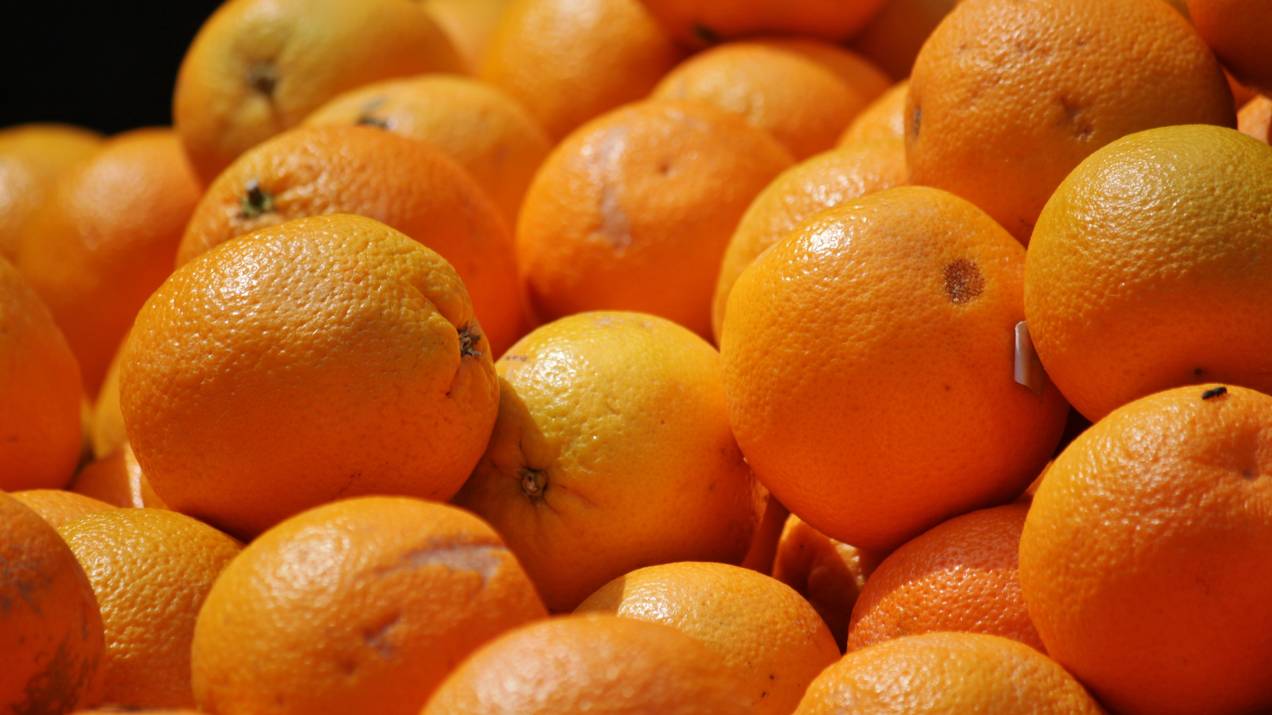
Orange Varieties Cultivated in Colombia: Characteristics and Harvest Seasons
For a wholesale importer, a supermarket chain buyer, or a juice processing company, choosing the origin of their fresh oranges doesn't end with deciding on the country: it ends with knowing which specific variety is being purchased, what its technical quality parameters are—Brix, acidity, juice yield, size—and in which months of the year it is available in sufficient volume to meet commitments with their own customers.
Colombia grows several orange varieties with distinct organoleptic and logistical profiles. Some stand out for their exceptional juice content and high Brix; others for their large size and resistance to long-distance transport in refrigerated containers. Understanding these differences is the first step in structuring a sourcing program from Colombia that operates with predictability and consistent quality.
This technical guide presents the main varieties grown in Colombia with relevant information for the international buyer: organoleptic and physical characteristics, juice yield, typical Brix, available sizes, post-harvest behavior, and harvest seasons by region.
Orange Classification System in Colombia
Before describing each variety, it is useful to understand how oranges are classified and measured in the Colombian export market. The most relevant technical parameters for the international buyer are:
| Parameter | Definition | Typical Range in Colombia | Relevance for the Buyer |
|---|---|---|---|
| Brix (°Bx) | Concentration of soluble solids (mainly sugars) in the juice, measured with a refractometer | 9 – 13 °Bx depending on variety and region | Determines the sweetness perceived by the consumer; premium markets require a minimum of 10–11 °Bx |
| Titratable Acidity | Percentage of citric acid in the juice; expressed as % anhydrous citric acid | 0.6% – 1.2% | Along with Brix, it determines the flavor balance; Brix/acidity ratio ideally > 10 |
| Brix/Acidity Ratio (Maturity Index) | The quotient of Brix divided by the percentage of acidity; indicator of flavor balance | 10 – 18 | The EU requires a minimum of 6.5; the US requires a minimum of 8 for export Valencia oranges |
| Juice Yield | Percentage of the fruit's weight that is extracted as juice | 40% – 55% | Critical for industrial buyers and processors; determines the actual cost per liter of juice |
| Size (Caliber) | Equatorial diameter of the fruit in millimeters | 56 mm – 92 mm | Retail markets have accepted size ranges; fruit outside the range may be rejected |
| Peel Color (Colorimetric Scale) | Measured on a scale from 1 (green) to 6 (deep orange) | 3 – 6 depending on variety and altitude | European and North American retail markets generally require color 4 or higher |
| Peel Thickness | Thickness of the rind in millimeters | 3 – 6 mm | Thicker peel = better transport resistance; thinner peel = higher juice yield |
Main Orange Varieties in Colombia for Export
1. Valencia Orange (Citrus sinensis var. Valencia)
Valencia is the most important export variety grown in Colombia and one of the most valued in international fresh orange markets. Its name refers to the Spanish region from which it spread globally, although currently the main world producers are Brazil, the USA, South Africa, and Colombia.
| Characteristic | Detail for the Importer |
|---|---|
| Typical Brix | 10 – 13 °Bx (higher at altitudes of 1,200–1,800 msnm) |
| Acidity | 0.7% – 1.0% citric acid; highly appreciated sugar/acidity balance |
| Juice Yield | 45% – 55% of fruit weight |
| Available Sizes | 56 – 80 mm; sizes 64 and 72 are in highest demand for international retail |
| Seeds | Few or none (generally 0–6 seeds per fruit) |
| Peel Color | Orange to orange-yellow; in hot zones it can be yellow-green (requires degreening for retail) |
| Peel Thickness | 3.5 – 5 mm; resistant to long-distance reefer transport |
| Post-harvest Shelf Life | 6 – 8 weeks under optimal cold chain conditions (5°C – 8°C) |
| Main Uses | Fresh consumption (retail and wholesale) and industrial juice production |
| Transport Resistance | High; one of the most suitable varieties for long-distance export |
Colombian Valencia grown in Southwest Antioquia and Huila is considered by several European buyers as one of the best expressions of this variety outside Mediterranean origins, precisely because of the high Brix generated by high-altitude cultivation with significant thermal amplitude between day and night.
Production Zones and Harvest Seasons — Valencia
| Producing Region | Altitude | Peak Harvest Months | Relative Volume |
|---|---|---|---|
| Southwest Antioquia (Jardín, Andes, Támesis) | 1,400 – 1,800 msnm | March – May / September – November | High; reference zone for premium quality |
| Meta (Villavicencio, Granada, Cumaral) | 300 – 700 msnm | May – July / November – January | Very high; largest individual volume in the country |
| Huila (La Plata, Palestina, Gigante) | 900 – 1,500 msnm | April – June / October – December | Medium-high; growing in exportable production |
| Valle del Cauca (Caicedonia, Sevilla) | 1,000 – 1,600 msnm | Almost continuous production | Medium; good post-harvest infrastructure |
2. Tangelo (Citrus × tangelo)
The Tangelo is a natural hybrid between the mandarin (Citrus reticulata) and the grapefruit (Citrus paradisi). In Colombia, it is mainly cultivated in Southwest Antioquia, where high-altitude conditions and thermal amplitude enhance its differential organoleptic characteristics. It is a variety with its own identity that can make its way into premium markets as an alternative to the standard orange.
| Characteristic | Detail for the Importer |
|---|---|
| Typical Brix | 11 – 14 °Bx; generally higher than Valencia under the same conditions |
| Acidity | 0.6% – 0.9%; milder acidity than Valencia, sweeter profile |
| Juice Yield | 40% – 50%; slightly lower than Valencia due to higher peel proportion |
| Available Sizes | 64 – 88 mm; tends toward larger sizes than Valencia |
| Seeds | Variable; generally more seeds than Valencia (6–12 per fruit) |
| Aromatic Profile | Mandarin notes layered over citrus orange flavor; more complex and floral aroma |
| Peel Color | Intense orange to reddish-orange; better natural coloration than common oranges in high-altitude zones |
| Peel Texture | Slightly rougher than Valencia; medium thickness peel (4–6 mm) |
| Post-harvest Shelf Life | 5 – 7 weeks in correct cold chain |
| Main Uses | Primarily fresh consumption; premium niche in European and North American retail |
Production Zones and Harvest Seasons — Tangelo
| Producing Region | Altitude | Peak Harvest Months | Observation |
|---|---|---|---|
| Southwest Antioquia (Jardín, Andes, Jericó) | 1,400 – 1,900 msnm | April – June / October – December | National reference zone for Tangelo; concentrated production but high quality |
| Risaralda and Caldas | 1,200 – 1,800 msnm | March – May / September – November | Minor production; good organoleptic quality |
3. Common or Creole Orange (Citrus sinensis)
The common orange—also called "naranja criolla" in Colombia—is the variety with the highest absolute volume in the country. It is mainly grown in low, warm areas such as the Meta foothills, Tolima, and southern Huila. Unlike the Valencia, it is not as strictly selected for export and shows greater variability in its characteristics, but it produces large fruit with very high juice content, making it interesting for industrial processors and certain segments of the wholesale market.
| Characteristic | Detail for the Importer |
|---|---|
| Typical Brix | 9 – 12 °Bx; variable by zone; low zones tend toward lower Brix |
| Acidity | 0.8% – 1.2%; more pronounced acidity than Valencia on average |
| Juice Yield | 48% – 58%; one of the highest yields among Colombian varieties |
| Available Sizes | 72 – 92 mm; generally larger sizes than Valencia |
| Seeds | Higher number of seeds than Valencia (10–20 per fruit) |
| Peel Color | Green to yellow-green in warm zones; requires degreening for most international retail markets |
| Peel Texture | Thicker peel on average (5–7 mm); good mechanical resistance |
| Post-harvest Shelf Life | 4 – 6 weeks in cold chain; slightly lower than Valencia due to higher water content |
| Main Uses | Industrial juice market, wholesale market, domestic consumption; less frequent in international premium retail |
| Key Consideration | Green coloration does not indicate immaturity: in tropical zones without winter cold, chlorophyll does not degrade even if the fruit is ripe. Degreening solves this condition for markets requiring orange color |
Production Zones and Harvest Seasons — Common Orange
| Producing Region | Altitude | Peak Harvest Months | Observation |
|---|---|---|---|
| Meta (Villavicencio, San Martín, Granada) | 200 – 600 msnm | June – August / December – February | Largest volume in the country; large fruit size; requires degreening |
| Tolima (Espinal, Ibagué, Guamo) | 400 – 900 msnm | April – July / October – January | Significant production; smaller fruit than Meta but higher Brix |
| South Huila (Pitalito, San Agustín) | 1,000 – 1,400 msnm | May – July / November – January | Better coloration than low zones due to altitude |
4. Navel Orange (Citrus sinensis var. Washington Navel)
The Navel orange is perhaps the most recognized variety in European and North American retail markets due to its characteristic "navel" at the bottom of the fruit, its total absence of seeds, and its ease of peeling. In Colombia, its cultivation is more limited than Valencia and common orange, but it is present in some areas of Antioquia and the Coffee Region where high-altitude conditions allow for the intense orange coloration that characterizes this variety.
| Characteristic | Detail for the Importer |
|---|---|
| Typical Brix | 10 – 13 °Bx; similar to Valencia under the same altitude conditions |
| Seeds | Seedless (parthenocarpic); a highly appreciated advantage for the final consumer |
| Available Sizes | 64 – 88 mm; tends toward larger sizes than Valencia |
| Peel Color | Intense orange at altitudes above 1,200 msnm; better natural coloration than other Colombian varieties |
| Juice Yield | 35% – 45%; lower than Valencia; Navel is primarily a table orange, not industrial |
| Post-harvest Shelf Life | 5 – 7 weeks in correct cold chain conditions |
| Limitation for Juice | Contains limonin, which generates bitterness in the juice a few hours after extraction; not suitable for industrial juice |
| Main Uses | Exclusively fresh consumption; premium in supermarket retail |
| Availability in Colombia | Lower than Valencia and common orange; export volumes still in development |
Varietal Comparison: Summary Table for the Importer
| Variety | Typical Brix | Juice Yield | Seeds | Most Frequent Size | Best For | Export Volume |
|---|---|---|---|---|---|---|
| Valencia | 10 – 13 °Bx | 45% – 55% | Few (0–6) | 64 – 72 mm | Premium Retail + Industrial Juices | Very high; first export option |
| Tangelo | 11 – 14 °Bx | 40% – 50% | Variable (6–12) | 72 – 80 mm | Differentiated Premium Retail | Medium; high-quality niche |
| Common Orange | 9 – 12 °Bx | 48% – 58% | Many (10–20) | 80 – 92 mm | Industrial Juices + Wholesale | Very high; largest absolute volume in the country |
| Navel | 10 – 13 °Bx | 35% – 45% | Seedless | 72 – 88 mm | Premium Retail (Table) | Low to medium; in development |
Availability Calendar: When to Harvest Each Variety in Colombia
The following table consolidates the estimated monthly availability of each variety according to the producing region. The availability column indicates if the volume is low (◯), medium (◐), or high (●) in that month considering aggregate national production.
| Month | Valencia | Tangelo | Common Orange | Navel | General Availability |
|---|---|---|---|---|---|
| January | ◐ | ◯ | ● | ◯ | Medium — good volume of common orange |
| February | ◯ | ◯ | ◐ | ◯ | Low — transition between harvests |
| March | ◐ | ◯ | ◐ | ◐ | Medium — start of Valencia harvest in Antioquia |
| April | ● | ◐ | ● | ◐ | High — one of the best months of the year |
| May | ● | ● | ● | ● | Very high — peak national harvest |
| June | ● | ● | ● | ● | Very high — continuation of peak; key window for Europe |
| July | ◐ | ◐ | ● | ◐ | High — Meta maintains high volume |
| August | ◯ | ◯ | ◐ | ◯ | Low — transition between seasons |
| September | ◐ | ◐ | ◐ | ◯ | Medium — start of second annual harvest |
| October | ● | ● | ◐ | ◐ | High — good month for Valencia and Tangelo |
| November | ● | ● | ● | ◐ | High — strong second season |
| December | ◐ | ◐ | ● | ◯ | Medium-high — good common orange availability |
◯ Low availability ◐ Medium availability ● High availability
This calendar is a general reference based on historical harvest patterns of the main producing regions. Weather conditions each year can advance or delay harvests by two to four weeks. Importers working with a regular supply program should coordinate with the exporter at least six to eight weeks in advance to confirm actual availability of the specific variety and size needed.
The Degreening Process: What It Is and When It Applies
One of the aspects that generates the most questions among international buyers approaching Colombian oranges for the first time is the green or yellow-green coloration that the fruit may present at harvest time, especially in varieties grown in low-lying areas like Meta.
This characteristic does not indicate immaturity. In tropical regions where night temperatures never drop below 15°C, the chlorophyll in the peel does not degrade even if the fruit has reached its optimum internal ripeness (Brix, acidity, juice yield). The fruit can have a Brix of 11 and a perfect sugar/acidity balance with the peel still green.
Degreening is the technical process that resolves this condition: the fruit is exposed in controlled chambers to very low concentrations of ethylene (1–5 ppm) at temperatures between 20°C and 25°C for 24 to 72 hours. The ethylene activates the enzymes that degrade chlorophyll and allow the carotenoid pigments (orange) to surface in the peel, achieving the coloration that the international market expects without affecting the internal characteristics of the fruit at all.
For the importer, the practical takeaway is this: if you buy oranges from low-lying areas (Meta, Tolima) without specifying the color requirement, you may receive ripe green fruit. If you need orange color for your retail market, you must specify it in the purchase contract and include it as a requirement in the post-harvest protocol with the exporter.
What Size Means for the Importer by Destination Market
| Size (Equatorial Diameter) | Commercial Classification | Preferred Destination Market | Colombian Variety that Produces It |
|---|---|---|---|
| 56 – 60 mm | Extra small / industrial | Juice industry; low-price markets | Valencia (high zones), common orange (high zones) |
| 64 – 68 mm | Small to medium | Europe and US supermarket retail; good price/presentation ratio | Valencia (primary), Navel |
| 72 – 80 mm | Medium to large | Premium retail; consumer who prefers large, visual fruit | Valencia (low zones), Tangelo, Navel, common orange |
| 88 – 92 mm | Extra large | Wholesale markets; food service channel; artisanal juices | Meta common orange, Navel in specific zones |
Frequently Asked Questions About Colombian Orange Varieties
Which Colombian variety has the highest Brix for industrial juice?
Valencia oranges grown in the higher altitude areas of Southwest Antioquia and Huila consistently reach the highest Brix values, between 11 and 13 °Bx in the best harvests. For a juice processor needing to optimize yield and soluble solids concentration, this high-altitude Valencia is the technically superior option. Common oranges from Meta also have high juice yield (up to 58%), but generally with lower Brix and more variability between lots.
Does Colombia have seedless oranges available in export volumes?
Colombian Valencia has very few seeds (0 to 6 per fruit), which makes it functionally close to a seedless orange for the final consumer. The Colombian Navel is completely seedless, but its production volume is still limited compared to Valencia. If a buyer needs seedless oranges in export volume for a regular supply program, Valencia is the most available and reliable option in the short term.
What variety do you recommend for a European premium retail importer?
For the European premium retail channel—supermarkets looking for oranges with a differentiated origin story, good coloration, no visible seeds, and high Brix—the recommendation is Valencia oranges from Southwest Antioquia in the months of April to June and October to November. This combination of variety, zone, and timing offers Colombia's best quality profile for the premium segment. Antioquian Tangelo can also be interesting for buyers looking for a truly differentiated variety and who are willing to communicate the tropical origin to the consumer.
Do Colombian oranges need degreening for all markets?
Not necessarily. Valencia oranges from Southwest Antioquia grown above 1,400 meters in altitude develop natural orange coloration suitable for international retail without degreening. Degreening is especially relevant for oranges from low-lying areas like Meta, where night temperatures do not drop enough for natural chlorophyll degradation. In practical terms: if the buyer prioritizes intense orange color and buys from low zones, degreening should be specified in the contract. If buying from high zones like Southwest Antioquia, natural coloration generally meets European and North American market standards.
Conclusion
Colombia does not have just one export orange: it has several varieties with different technical profiles, volumes, and harvest seasons that allow for the construction of sourcing programs tailored to the specific needs of each type of buyer. Valencia is the workhorse—available in more volume, more adapted to international retail, and more consistent in its technical parameters. Tangelo is the differentiated option for the premium segment. The common orange is the ally of the juice industrialist who needs high yield. And the Navel, though in development, can be the most recognized option by the European consumer thanks to its absence of seeds and intense coloration.
If you would like to receive updated technical information on the availability of specific varieties, Brix levels of the current harvest, and purchasing conditions for your destination market, contact us and we will prepare a technical sheet for you without obligation.
