
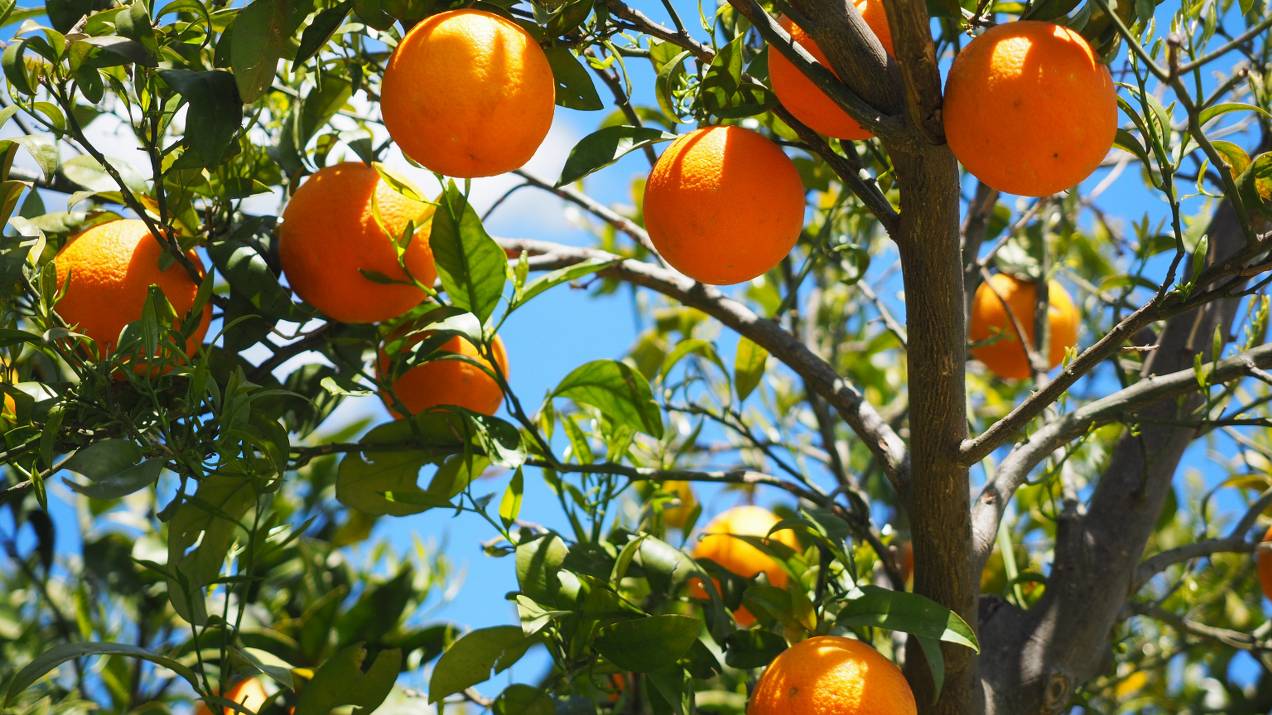
Orange Harvest Seasons in Colombia: Product Availability Guide
For a fresh fruit importer, the most critical operational question regarding any supply origin is not just whether the product is good, but when it is available and in what volume. Production cycles determine when purchases can be made, when there is competition from other origins, and when Colombia offers a sourcing window that other countries cannot cover.
Colombia holds a real competitive advantage in this regard: unlike countries with a single annual harvest season—such as Spain, which produces between October and May, or South Africa, whose harvest falls between June and October—Colombia has two annual harvests in most of its producing regions. Its geographical distribution is so diverse that the availability of fresh oranges is practically continuous throughout the year, with volume variations but without months of zero production.
This guide explains the Colombian harvest calendar in detail: when each region harvests, which varieties are available in each period, in which months Colombia represents the best supply window for importers in the USA, Canada, and Europe, and how to plan a purchasing program that takes advantage of this continuity.
Why Does Colombia Have Two Harvests a Year?
The key to the Colombian citrus calendar lies in the bimodal climate regime that characterizes most of the country's Andean territory. Colombia does not have summer and winter like temperate climate countries; it has two rainy seasons (winter periods) and two dry seasons (summer periods) per year, separated by approximately six months.
In orange cultivation, flowering—and therefore the future harvest—occurs at the end of dry periods or water stress, when the plant receives the stimulus of the first rains after a period of water scarcity. This cycle repeats twice a year in most Andean producing zones, generating two harvest peaks separated by approximately five to six months.
The period between flowering and fruit ripening is approximately seven to nine months for Valencia oranges and Colombian common oranges. Therefore, flowers appearing in January or February (at the start of rains after the first-quarter drought) produce fruit that ripens between September and November, while August-September flowers produce a harvest between April and June of the following year.
Harvest Calendar by Region: Month by Month
The following table consolidates the estimated availability of fresh oranges in Colombia by region and month of the year. The indicators reflect the relative volume available for export: low availability (◯), medium availability (◐), and high availability (●).
| Month | Southwest Antioquia | Meta | Huila | Valle del Cauca | Tolima | National Availability |
|---|---|---|---|---|---|---|
| January | ◯ | ● | ◐ | ◐ | ◐ | Medium — volume sustained by Meta |
| February | ◯ | ◐ | ◯ | ◯ | ◐ | Low — the month of lowest availability in the year |
| March | ◐ | ◐ | ◐ | ◐ | ◐ | Medium — start of the first high season |
| April | ● | ● | ● | ● | ● | High — start of the national peak |
| May | ● | ● | ● | ● | ● | Very High — maximum yearly peak |
| June | ◐ | ● | ● | ● | ● | High — key window for Europe (end of Spanish season) |
| July | ◯ | ● | ◐ | ◐ | ◐ | Medium-high — Meta sustains volume |
| August | ◯ | ◐ | ◯ | ◯ | ◯ | Low — transition month between seasons |
| September | ◐ | ◐ | ◐ | ◐ | ◐ | Medium — start of the second high season |
| October | ● | ◐ | ● | ● | ● | High — second season peak |
| November | ● | ● | ● | ● | ◐ | High — second yearly peak |
| December | ◐ | ● | ◐ | ◐ | ◐ | Medium-high — good year-end with Meta active |
◯ Low availability ◐ Medium availability ● High availability
This calendar is a reference based on historical harvest patterns. Weather conditions each year—especially El Niño (prolonged drought) or La Niña (excessive rain) phenomena—can advance or delay harvests by two to six weeks. Importers working with a regular supply program should confirm specific dates with the exporter at least eight weeks in advance.
The Two Months of Lowest Availability: February and August
The calendar clearly shows that February and August are the two months of lowest fresh orange availability in Colombia. Both correspond to transition periods between harvests: plants are in the fruit development phase for the following season, and the previous harvest has already been exhausted or is in its final weeks.
For importers needing an uninterrupted product flow, these two months represent the highest risk of shortage from Colombia. Common strategies to manage these windows are:
- Buying additional volume in January and July to build inventory that covers the following low-availability month. Valencia oranges under good cold chain conditions can be maintained for six to eight weeks after harvest.
- Combining Colombian origin with another complementary origin during those two months: the European market can complement with oranges from South Africa during the July-August gap, and the North American market with oranges from California or Florida during the January-February gap.
- Negotiating with the exporter for the availability of cold-storage oranges (fruit harvested in November or May and kept in cold storage until the next season), if product quality remains within the buyer's parameters.
Opportunity Windows for European Importers
For European importers—especially those using Spanish oranges as their primary source—Colombia offers a very specific opportunity window between June and September, when the Spanish harvest has ended and before the new season begins in October.
| Period | Situation in Spain | Situation in Colombia | Opportunity for European Importers |
|---|---|---|---|
| October – May | Active season: high availability of Spanish oranges (Navel, Valencia, Navelate) | Second high season (Oct-Nov) and first high season (Apr-May); parallel availability | Colombia as a complementary origin or price alternative when Spain is in short supply during transitions |
| June – September | No export-quality fresh orange production; European market depends on the Southern Hemisphere (South Africa, Argentina) with high freight and long lead times | Meta and Huila in full harvest (June-July); start of the second season in September | Strategic window: Colombia can cover European demand with shorter transit times and lower freight than South Africa |
Sea transit time from Colombia (Barranquilla or Cartagena) to Rotterdam or Barcelona is 18 to 22 days. From South Africa to Rotterdam, it is 16 to 20 days. The difference in transit is small, but Colombian oranges come from the geographical equator—implying different tropical production conditions—and generally have a more competitive FOB price than South African oranges in those months. For European buyers needing oranges in July, Colombia is a real and not just a theoretical alternative.
Opportunity Windows for USA and Canadian Importers
The North American market has its own seasonal dynamics. Domestic orange production in the USA is concentrated mainly in Florida (October-June) and California (November-May), with a period of lower domestic availability between July and September.
| Period | Situation in the USA (Domestic Production) | Situation in Colombia | Opportunity for North American Importers |
|---|---|---|---|
| October – May | Active Florida and California season; high domestic availability | Both high seasons included (Oct-Nov and Apr-May); Colombia in competition with domestic production | Colombia can offer origin diversification and differentiated tropical fruit for the premium segment, especially high-altitude Valencia oranges |
| June – September | Lower domestic production; dependence on imports from Mexico and South Africa | Meta and Huila in full harvest (June-July); start of the second season in September | Strategic window: Colombia covers import demand with 5–8 days of transit vs. 18+ days from South Africa |
| Year-round | Colombia–USA FTA in effect since 2012 | Nearly continuous availability | Permanent tariff advantage for oranges originating in Colombia compared to South Africa or other origins without an FTA |
Distance is Colombia's most evident advantage for the North American market: 5 to 8 days of sea transit from Barranquilla or Cartagena to Miami or New York means the North American importer receives Colombian oranges with 5 to 6 weeks of available shelf life. An orange leaving South Africa with the same 8-week shelf life arrives with only 4 or 5 weeks available after 16-20 days in transit. For a distributor needing time to move product in their market, this difference is operatively significant.
How to Plan a Sourcing Program from Colombia?
For an importer wanting to structure a regular purchasing program for fresh oranges from Colombia, these are the operational planning parameters:
| Parameter | Planning Reference | Observation |
|---|---|---|
| Time from order confirmation to shipment | 3 – 6 weeks | Includes: coordination with producer, harvest, selection, packaging, ICA phytosanitary process, and container loading |
| Sea transit time to USA/Canada | 5 – 12 days | Depending on departure port (Barranquilla/Cartagena) and arrival port (Miami, New York, Montreal) |
| Sea transit time to Europe | 16 – 24 days | Depending on departure and destination port (Rotterdam, Barcelona, Hamburg) |
| Total Lead Time (order → delivery at importer's warehouse) | USA: 4 – 7 weeks / Europe: 6 – 10 weeks | Includes customs clearance at destination (1–3 additional days) |
| Minimum volume per operation (FCL) | 1 x 40' reefer container ≈ 18 – 20 net tons | Below this volume, LCL reefer is possible but with higher logistics cost per kg |
| Minimum anticipation to confirm availability | 6 – 8 weeks before desired shipment | Confirm specific variety, origin zone, sizes, and volume with the exporter |
| Recommended transport temperature | 5°C – 8°C for Valencia and common oranges; 6°C – 9°C for Tangelo | Verify with the exporter the optimal temperature for the variety and specific transit time |
Climate Impact on the Calendar: El Niño and La Niña
The harvest calendar presented is a historical reference, not a guarantee. Large-scale climate phenomena—especially El Niño and La Niña—can significantly alter harvest seasons in Colombia:
- El Niño (prolonged drought): reduces rainfall below average and can cause water stress in crops, advancing flowering in some zones and delaying fruit ripening in others. In intense El Niño years, the first-half harvest can advance by two to four weeks, and volumes may be lower than in normal years.
- La Niña (excessive rain): excess precipitation that can cause phytosanitary problems (fungi, rot) in fruit near harvest, reduce post-harvest quality, and delay field operations. Harvests in strong La Niña years may have higher Brix variability and a higher incidence of mechanical damage due to humidity.
Importers building a regular supply program from Colombia must include this climate variability in their planning: maintain frequent contact with the exporter during the months preceding each season, diversify origin within Colombia (e.g., combining Meta and Southwest Antioquia) to reduce exposure to a localized climate event, and have an identified alternative origin for months of lower availability or climatologically difficult years.
Comparison of Colombian Calendar with Other Key Origins
| Origin | Export Availability Months | Transit Time to Miami | Transit Time to Rotterdam | Complementarity with Colombia |
|---|---|---|---|---|
| Colombia | Almost year-round (peaks: Apr-Jun and Oct-Nov; lows: Feb and Aug) | 5 – 8 days | 18 – 22 days | — |
| Spain | October – May | 15 – 18 days | 3 – 6 days (land/short sea) | Excellent: Spain covers Oct-May; Colombia covers the Jun-Sep gap in Europe |
| South Africa | June – October | 18 – 22 days | 16 – 20 days | Good: both cover Jun-Oct but Colombia has shorter transit to the USA |
| Mexico | November – April | 3 – 6 days | 15 – 20 days | Good: Mexico covers Nov-Apr for USA; Colombia complements in other months |
| Argentina | June – October | 12 – 16 days | 20 – 25 days | Similar to South Africa in timing but with longer transit times |
| Egypt | November – April | 18 – 22 days | 7 – 10 days | Good for Europe in Nov-Apr; Colombia complements in the Jun-Sep window |
Frequently Asked Questions About Orange Seasons in Colombia
Can I buy Colombian oranges year-round or are there months without product?
Colombia has fresh orange availability year-round, but with significant volume variations. The months with the highest availability and best selection of varieties and sizes are April-June and October-November. The lowest availability months are February and August, which correspond to transition periods between harvests. During those two months, it is possible to get product, but volume is more limited and the variety of origins within the country is also reduced. An importer with regular demand should plan their purchasing calendar taking these cycles into account.
How far in advance should I place my order to arrive in a specific month?
For Colombian oranges to arrive at your warehouse in a given month, you must confirm the order with the exporter at least 6 to 8 weeks in advance. This timeframe covers coordination with the producer, harvest, the selection and packaging process in the post-harvest center, processing the ICA phytosanitary certificate, and container loading time. To the pre-shipment period, you must add the sea transit time: 5–8 days for the USA and 18–22 days for Europe. In total, the lead time from your order confirmation to arrival at your warehouse is between 4 and 7 weeks for North America and between 6 and 10 weeks for Europe.
Is orange quality the same at all times of the year?
Not exactly. The organoleptic quality of Colombian oranges—especially Brix—tends to be higher in fruit from peak seasons (April-June and October-November) than in fruit from transition seasons. During peak harvest seasons, producers can be more selective with lots destined for export. Early harvest fruit (March, September) may have slightly lower Brix because the fruit has not yet reached full maturity. For importers needing a guaranteed minimum Brix, the recommendation is to schedule shipments preferably in the peak months of each season and specify the minimum required Brix in the purchase contract.
Which variety do you recommend for importing in June or July from Colombia to Europe?
For shipments to Europe in June and July, the most available option in those months is Valencia and common oranges from Meta and Huila, which are at their harvest peak during that period. Meta's Valencia has large sizes (72–88 mm), good juice yield, and good volume availability, although it requires degreening to achieve the coloration the European market expects. Huila's Valencia, at higher altitudes, has better natural coloration and more balanced Brix, though in lower volume. If the importer wants the highest quality Antioquian Valencia, June still has residual availability from Southwest Antioquia, although that area's peak passed in May.
Conclusion
The orange harvest calendar in Colombia is one of its most concrete competitive advantages for the international importer. The combination of two annual high seasons (April-June and October-November), a geographical distribution that generates staggered production between regions, and a low-availability period reduced to only two months a year makes Colombia an origin with a supply continuity that very few tropical countries can match.
For European importers, the June-September period is the clearest strategic window: Colombia has product when Spain does not. For North American importers, the advantage is structural throughout the year: the 5 to 8 days of transit from Colombia to Miami—compared to 16-22 days from other origins—makes the country the imported orange source with the highest available shelf life upon arrival in the USA.
If you want to receive the updated availability calendar for the current season, with projected volumes by zone and variety, contact us and we will send it to you without obligation.
