
Most common commercial presentations in food exports
One of the most common mistakes in food exports is not in the product or the price… it is in the commercial presentation. A product may be competitive at origin, comply with sanitary regulations, and have international demand, yet fail in the destination market simply because the selling format does not match the buyer’s commercial logic.
In international trade, products are not sold the way they are locally produced: they are sold the way the market buys them. Therefore, understanding the right commercial presentations reduces logistics costs, avoids reprocessing in destination, and increases rotation at the point of sale.
In this article we will analyze the most used presentations in food exports from Colombia, when to use each one, and how they affect logistics, storage and international commercialization.
What is a commercial presentation in exports?
The commercial presentation is the way the product reaches the international buyer: weight, packaging type, material, labeling and logistics configuration.
It should not be confused with production packaging. For example:
- Production packaging → protects the food
- Commercial packaging → facilitates selling
- Logistics packaging → facilitates transportation
In exports, all three must align. If one fails, the total cost of the product in destination increases.
Main commercial presentations in exported foods
1. Institutional presentations (food service)
These are the most commonly used for importers, wholesale distributors, restaurants and processing plants.
Characteristics:
- Large volumes
- Low cost per kilogram
- Functional packaging, not visual
- High logistics efficiency
Common formats:
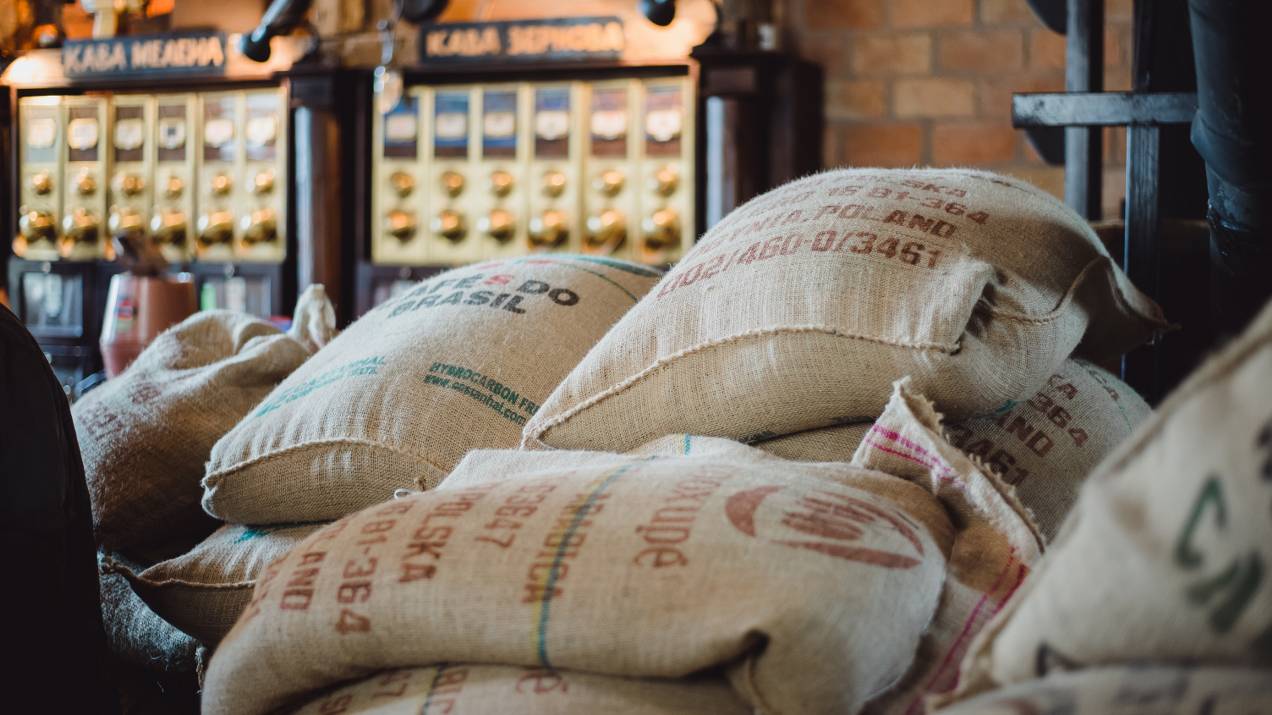
- 25 kg bags
- 50 kg bags
- 10 kg sacks
- 20–25 liter drums
- Master cartons without retail design
This format is preferred in B2B exports because the buyer repacks or transforms the product at destination.
Logistics advantage: reduces freight cost per sold unit.
Typical example: sugar, rice, flour, industrial pulps, green coffee.
2. Retail presentations (supermarket)
This format is used when the product will be sold directly to the final consumer.
Characteristics:
- Mandatory graphic design
- Labeling according to destination country regulation
- Lower weights per unit
- Higher added value
Most common weights:
- 250 g
- 500 g
- 1 kg
- 2 kg
- Multi-unit pack
Here the logistics cost per kilo increases, but the selling price also increases significantly.
Typical example: powdered panela, snacks, roasted coffee, ethnic products.
3. Industrial presentations (raw material)
Used when the food will be processed again in destination.
Characteristics:
- The buyer does not need aesthetics
- Focus on yield
- High volumetric efficiency
- Recurring supply contracts
Common formats:
- Big Bags 500 – 1,000 kg
- Metal drums
- IBC (Intermediate Bulk Container)
- Bulk container loading
This format reduces logistics costs and port handling times.
Example: oils, liquid sugars, industrial pulps, grains.
How to choose the correct presentation?
The choice does not depend on the exporter, it depends on the buyer’s commercial channel.
Key question: Who finally sells the product?
| Buyer type | Recommended presentation |
|---|---|
| Wholesale distributor | 25–50 kg bags |
| Food industry | Big bags / bulk |
| Supermarkets | Retail packaged |
| Restaurants | Food service 5–20 kg |
Exporting in the wrong presentation generates extra costs at destination, and normally the buyer will not repeat the order.
Logistics impact of presentation
1. Ocean freight costs
The greater the logistics density of the cargo, the lower the cost per kilo.
- Bags → efficient
- Small boxes → expensive
- Bulk → most economical
That is why many importers prefer to import institutional format and package locally.
2. Port handling
Each handled unit increases costs:
- More cartons = more handling
- More handling = more risk
- More risk = more claims
3. Storage
International warehouse space is expensive. The format directly affects rotation:
- Bags → high rotation
- Retail → slow rotation
- Bulk → industrial rotation
Common exporter mistakes
- Packing for Colombia, not for the destination market
- Exporting retail without confirmed sales channel
- Not consulting the importer before production
- Designing label without validating regulation
- Not calculating packaging logistics impact
The result is usually: the product arrives well… but it does not sell.
Strategic recommendation
For first exports, the safest presentation is usually institutional or industrial. It allows demand validation, risk reduction, and later migration to retail.
Many projects fail by starting with private brand without validating consumption volume.
Conclusion
The commercial presentation is not a marketing detail; it is a logistics and strategic decision. It defines costs, rotation speed, market acceptance and business continuity.
In food exports, the correct product in the wrong format is equivalent to the wrong product.
Before producing, it must always be confirmed how the destination market buys, not how the local producer sells.
If you need to evaluate the correct presentation according to the country and importer type, our team can help structure the export from a commercial and logistics approach.
Contact us here and we will review your product before you make the first international production.
