
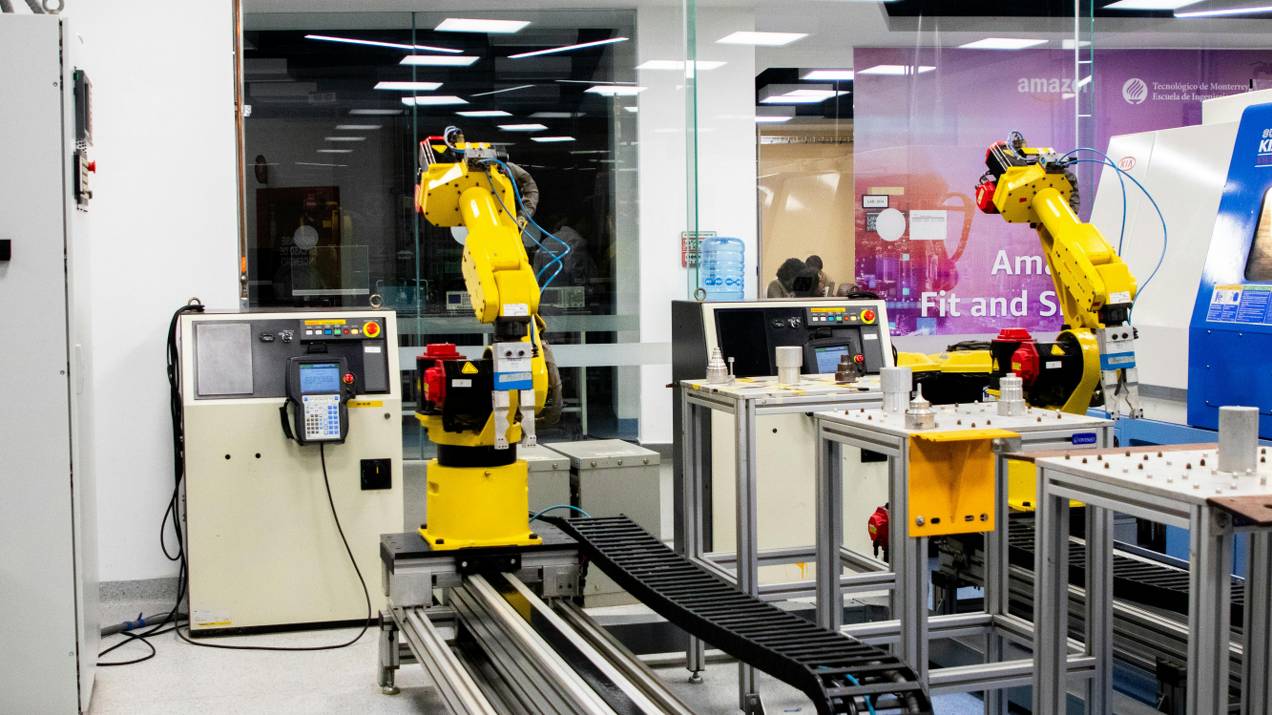
Importing Tools and Industrial Equipment into Colombia: Complete Guide
Tools and industrial equipment are two of the most common import categories in Colombia among manufacturing companies, construction firms, industrial hardware suppliers, and machinery distributors. From a box of carbide drill bits to a multi-meter CNC machining center, including compressors, welding machines, bench drills, plasma cutting equipment, and precision measuring tools, the range of products in this category is extremely broad and their tariff and logistics conditions vary significantly.
This guide covers everything you need to know to import tools and industrial equipment into Colombia efficiently and without costly mistakes: tariffs by product type, required documents, the customs process, how to take advantage of existing free trade agreements, and what to consider in logistics depending on the size and weight of the equipment.
Classification of tools and industrial equipment in the Colombian tariff schedule
The first step to importing correctly is identifying the product’s tariff subheading. Tools and industrial equipment are distributed across several chapters of the Colombian Customs Tariff, and the correct classification determines the applicable duty, possible additional requirements, and whether a preferential tariff exists under a free trade agreement.
| Product type | Tariff chapter | Typical examples | General tariff |
|---|---|---|---|
| Machine tools for metalworking | 84 (8456 – 8465) | CNC lathes, milling machines, machining centers, grinders, column drills | 0% – 5% |
| Woodworking machines | 84 (8465) | Table saws, planers, CNC routers, panel saws | 0% – 5% |
| Compressors and pneumatic equipment | 84 (8414) | Screw compressors, piston compressors, air dryers, electric compressors | 0% – 5% |
| Welding equipment | 85 (8515) | MIG/MAG welders, TIG welders, arc welding machines, plasma cutting equipment | 0% – 5% |
| Lifting and handling equipment | 84 (8425 – 8428) | Hoists, gantry cranes, forklifts, overhead cranes | 0% – 5% |
| Hand tools (steel) | 82 | Wrenches, pliers, screwdrivers, hammers, hand saws, drill bits | 5% – 15% |
| Portable electric tools | 85 (8467) | Drills, grinders, sanders, portable circular saws, screwdrivers | 0% – 10% |
| Measurement and control equipment | 90 | Calipers, micrometers, roughness testers, metrology equipment, process control instruments | 0% – 5% |
| Machinery parts and spare components | 84 – 85 (specific subheadings) | Spindles, heads, tool holders, control panels, sensors | 0% – 10% |
| Cutting tools (carbide, HSS, CBN) | 82 (8207) | Milling cutters, carbide drill bits, interchangeable inserts, turning tools | 5% – 10% |
| Painting and finishing equipment | 84 (8424) | Paint booths, airless spray guns, electrostatic equipment, industrial polishers | 0% – 5% |
| Electric generators | 85 (8502) | Generator sets, emergency generators, industrial UPS systems | 0% – 5% |
As the table shows, most industrial machinery and equipment have tariffs of 0% or very low rates in Colombia, reflecting the country’s policy of facilitating access to capital goods that are not produced locally. However, hand tools and cutting tools may have higher rates, especially when imported from countries without a free trade agreement with Colombia such as China.
Tariffs under free trade agreements: the savings many importers do not use
Colombia has Free Trade Agreements with the United States, the European Union, South Korea, Canada, and other countries that are major exporters of tools and industrial equipment. For many of these categories, the tariff under an FTA is 0%, compared with rates between 5% and 15% when importing from countries without an FTA, such as China.
| Product type | Tariff from China (no FTA) | Tariff from the U.S. (FTA in force) | Tariff from Germany/Spain (EU FTA in force) | Tariff from South Korea (FTA in force) |
|---|---|---|---|---|
| CNC machinery (ch. 84) | 0% – 5% | 0% | 0% | 0% |
| Welding equipment (ch. 85) | 0% – 5% | 0% | 0% | 0% |
| Hand tools (ch. 82) | 10% – 15% | 0% | 0% | 0% – 5% |
| Cutting tools (8207) | 5% – 10% | 0% | 0% | 0% |
| Portable electric tools (8467) | 5% – 10% | 0% | 0% | 0% – 5% |
| Measuring instruments (ch. 90) | 0% – 5% | 0% | 0% | 0% |
For categories such as hand tools or portable electric tools, the difference between importing from China (without an FTA) and from the U.S. or Europe (with an FTA) can be 10 to 15 percentage points in tariffs. On an import of USD 30,000, that difference represents between USD 3,000 and USD 4,500 in savings in tariffs alone. This comparative origin analysis is essential before selecting the supplier.
Documents required to import tools and industrial equipment
The documentation required to import tools and industrial equipment follows the general structure of any general cargo import, with some specific aspects depending on the type of equipment:
- Commercial invoice: must include the complete technical description of the equipment or tool: brand, model, serial number if applicable, power, voltage, capacity, and any relevant technical specification. A generic description such as “industrial machine” without further detail is one of the main reasons for a red channel inspection or a request from DIAN.
- Packing list: specifies the number of packages, boxes, or bundles, the gross and net weight of each one, and their dimensions. For large machinery shipped disassembled in multiple pieces, the packing list must clearly identify which components are in each package.
- Bill of lading (BL or AWB): issued by the shipping line or airline. For heavy or high-volume equipment, verify that the shipment type on the BL (FCL, LCL, OOG) exactly matches the physical characteristics of the equipment.
- Certificate of origin: essential when accessing tariff preferences under a free trade agreement. For equipment imported from the U.S., Germany, Spain, Italy, or South Korea, the certificate of origin may mean a 0% tariff compared to the general tariff applicable from China.
- Cargo insurance policy: mandatory for procedures before DIAN. For high-value equipment such as machining centers or precision measuring equipment, it is especially important to insure the real value of the equipment, including installation and commissioning costs if they were included in the price.
- Technical manual and specification sheet (when applicable): for certain equipment, DIAN may request technical documentation verifying the declared characteristics. Having the manufacturer’s manual available can speed up the inspection process if DIAN assigns a red channel.
- Technical conformity certificates (when applicable): for equipment operating under pressure, high-power electrical equipment, or machinery with specific safety requirements, some buyers or industries require certifications such as CE (for European-origin equipment), UL (for North American-origin equipment), or other international standards. Although Colombia does not generally require these certificates for importation, they may be required by the final customer or sector regulations.
Customs process to import industrial equipment in Colombia
Step 1 — Verify the tariff subheading and duties before purchasing
Before confirming the purchase order with the supplier, identify the exact tariff subheading of the equipment in DIAN’s MUISCA portal. Verify the general tariff, whether a preference exists under a free trade agreement with the supplier’s country of origin, and whether any trade defense measures apply to that subheading from that origin. This prior analysis can change the supplier or sourcing decision and save significant costs.
Step 2 — Negotiate the Incoterm and purchase conditions
For industrial equipment, the most recommended Incoterm for Colombian importers is FOB (Free On Board): the supplier delivers the equipment at the port of origin and the importer—through their freight forwarder—contracts and controls international freight from that point. This allows you to choose the most convenient shipping line or airline, control insurance, and obtain competitive freight rates. For very large or heavy equipment requiring special handling at the port of origin, check with your freight forwarder what type of containerization or cargo service is required before confirming the Incoterm.
Step 3 — Define the type of shipment according to the equipment’s characteristics
The physical characteristics of the equipment determine the type of container or cargo service required:
| Equipment type | Recommended shipping method | Notes |
|---|---|---|
| Hand tools, small equipment | LCL (consolidated cargo) or FCL if volume justifies | LCL convenient for volumes under 10–15 m³ |
| Standard-size machinery | FCL 20' or FCL 40' | Verify that the equipment fits through the container door (2.3 m wide × 2.5 m high) |
| High-precision or fragile equipment | FCL with special packaging or air freight for critical components | Packaging in reinforced wooden crate with vibration and moisture protection |
| Heavy or oversized machinery | OOG (Out of Gauge): open top, flat rack, or low-bed | Requires special permits for road transport in Colombia |
| Equipment with disassembled components | FCL with packaging in multiple clearly identified packages | Packing list must identify components per package to facilitate DIAN inspection |
Step 4 — Prepare and review documentation before shipment
Once the shipment is confirmed, request drafts of the export documents from the supplier—invoice, packing list, and BL draft—and share them with your customs broker for review before the vessel departs. For industrial equipment, the technical description on the invoice is especially important: DIAN may require it to match exactly the declared tariff subheading. An error at this stage can generate a red channel with physical inspection, adding between 5 and 10 business days to the customs clearance process.
Step 5 — Customs procedure with DIAN and obtaining release
Once the vessel arrives at the Colombian port, the customs broker submits the import declaration to DIAN through the MUISCA system. For industrial equipment assigned to the green channel, release is obtained within 24 to 48 hours after payment of duties and VAT. If DIAN assigns a red channel—which is more common for high-value equipment or complex technical descriptions—the broker coordinates the physical inspection with DIAN inspectors, provides the equipment’s technical documentation, and manages the release after verification.
Step 6 — Inland transport and delivery to the plant
Once release is obtained, the logistics operator coordinates inland transport from the authorized port warehouse to the importer’s plant or warehouse. For heavy or oversized machinery in Colombia, this stage requires a special vehicle (low-bed or platform), special transport permits from INVIAS or the corresponding transit authority, and in some cases road escort. These permits must be processed in advance—between 2 and 5 business days—to avoid delays in removing the equipment from the port.
Special considerations for oversized or heavy machinery
Importing large industrial machinery—large-bed lathes, hydraulic presses, large-format laser cutting equipment, industrial cranes—requires additional steps that an inexperienced importer may not anticipate:
- Dimension review before shipment: verify that the equipment can be transported on Colombian roads without exceeding legal limits for width (2.6 m), height (4.4 m), or length. If it exceeds them, special permits must be obtained that define the exact route the vehicle can use.
- Route survey: for very large equipment it is advisable to conduct a prior survey of the route from the port to the plant to identify bridges with height or weight restrictions, tunnels with width limitations, and road sections where the turning radius may be insufficient for the loaded vehicle.
- Receiving site preparation: verify that the plant has the necessary conditions to receive the equipment: adequate access for the transport vehicle, floor structural capacity to support the equipment weight, and lifting equipment (cranes, hoists) for unloading if the equipment cannot be lowered using the vehicle ramp.
- Packaging and protection at origin: for precision machinery such as machining centers or measuring equipment, packaging at origin must include vibration protection (high-density foam, anti-vibration), moisture protection (desiccants, barrier film), and mechanical protection (reinforced wooden crate). Precision equipment damaged during transport may be irreparable and insurance claims can be long and complex.
Example of total cost: importing a CNC machining center from Taiwan
To illustrate the cost structure of an industrial machinery import, below is a calculation for a 3-axis CNC machining center imported from Taiwan, with an FOB value of USD 45,000, shipped in a 20-foot container to Medellín via the port of Buenaventura:
| Concept | Value (USD) | Value (COP approx.) |
|---|---|---|
| FOB value of equipment | USD 45,000 | COP 184,500,000 |
| Sea freight FCL 20' (Taiwan → Buenaventura) | USD 2,800 | COP 11,480,000 |
| Cargo insurance (0.6% of CIF) | USD 287 | COP 1,176,700 |
| CIF value (tax base) | USD 48,087 | COP 197,156,700 |
| Tariff (0% — machinery ch. 84) | USD 0 | COP 0 |
| Import VAT (19% on CIF) | USD 9,137 | COP 37,459,700 |
| Destination THC (Buenaventura) | USD 280 | COP 1,148,000 |
| Customs brokerage (SIA) | USD 400 | COP 1,640,000 |
| Freight forwarder fees | USD 250 | COP 1,025,000 |
| Origin charges (Taiwan) | USD 320 | COP 1,312,000 |
| Inland transport Buenaventura → Medellín (20') | USD 950 | COP 3,895,000 |
| Total import cost | USD 59,424 | COP 243,676,400 |
| Additional cost over FOB value | +32.1% |
This example shows that, thanks to the 0% tariff for machinery under chapter 84, the additional cost over the FOB value is 32%, significantly lower than for categories with higher tariffs. The largest component of that additional cost is VAT (19%), which companies can recover as input VAT in their bimonthly VAT return. Excluding VAT, the real non-recoverable logistics cost over the FOB value of the equipment is approximately 13%.
Note: reference exchange rate of COP 4,100 per dollar. COP values are approximate.
Common mistakes when importing tools and industrial equipment in Colombia
- Not verifying whether the equipment physically fits in a standard container: many importers assume any machine fits in a 20- or 40-foot container without verifying dimensions. Equipment exceeding the internal dimensions of a standard container (5.9 m × 2.35 m × 2.39 m for a 20') requires special shipping methods that are more expensive and logistically complex.
- Undervaluing equipment to pay less VAT: declaring a customs value lower than the real value to reduce import VAT is a serious customs offense. DIAN has access to international reference price databases and can detect under-invoicing. Penalties may include fines of up to 200% of unpaid duties, seizure of the goods, and criminal sanctions in severe cases.
- Importing the wrong voltage: Colombia operates mainly on 110V/60Hz, although some industries use 220V or 440V. Importing equipment designed for European 220V without verifying electrical compatibility may render the equipment unusable or require expensive transformers. Always specify the correct voltage and electrical frequency in the order to the supplier.
- Not requesting the certificate of origin when an FTA applies: importing tools from the U.S. or Europe without the corresponding certificate of origin means paying the general tariff when it could be 0%. This is an avoidable cost that repeats in every import.
- Not including critical spare parts in the same shipment: when industrial equipment fails, waiting 4 to 8 weeks for spare parts to arrive from abroad can completely halt production. If you import heavily used equipment, consider including in the same container a minimum stock of the most frequently replaced spare parts: belts, seals, bearings, fuses, filters, and wear electronic components.
Case study: industrial tool distributor reduces import costs by 19%
An industrial tools distributor in Medellín imported hand tools, carbide drill bits, and portable electric tools monthly from China under Incoterm CIF. They did not systematically verify the tariff subheading of each reference, and in several cases they paid tariffs of 10% and 15% without realizing that some items could be imported with a 5% tariff under a different classification.
After reviewing their operation with Nextstop Group, the following adjustments were identified with direct cost impact:
- Tariff reclassification of 12 cutting tool references that had been declared at 10% but under the correct subheading had a 5% tariff, generating monthly savings of USD 1,800.
- Identification that portable electric tools from the U.S. brand in their portfolio could be imported directly from the United States with a 0% tariff under the FTA, instead of the 10% they paid when importing them from China (where the supplier manufactured them). The change of origin reduced customs duties in that category by 10%.
- Change of Incoterm from CIF to FOB, saving 12% in the freight component by negotiating directly with shipping lines through the freight forwarder.
- Total reduction in import costs of 19% in the first six months, with a single point of contact for the entire logistics and customs operation.
Frequently asked questions about importing tools and industrial equipment in Colombia
Do imported electric tools require any special certification in Colombia?
Colombia generally does not require mandatory technical certification for importing electric tools for industrial use. However, DIAN may request technical documentation from the manufacturer during a red channel inspection to verify that the product matches the declaration. For tools that will be sold to the general public, the Superintendence of Industry and Commerce may require compliance with Colombian technical standards (NTC). Consult your customs broker to determine whether your product requires prior approval.
Can I import used or second-hand machinery into Colombia?
Yes, Colombia allows the import of used machinery for industrial use. However, used machinery requires special valuation before DIAN to determine the customs value, since the invoice value cannot be used directly as with new machinery. The process may require an appraisal of the equipment’s value by an independent expert. Additionally, some types of used machinery may require technical inspection to verify that they meet minimum safety standards. Consult your customs broker before starting the import process for second-hand machinery.
How long does it take for industrial equipment to arrive from China to Medellín?
Sea transit from Chinese ports (Shanghai, Guangzhou, Ningbo) to Buenaventura takes between 28 and 40 days. Customs clearance with complete documentation and green channel takes between 2 and 5 business days. Inland transport from Buenaventura to Medellín takes between 12 and 18 hours. The total lead time from shipment in China to delivery at the plant in Medellín is between 32 and 48 days under normal conditions. If the equipment requires urgent delivery, air freight can reduce transit time to between 5 and 7 days, although at a significantly higher cost.
Can I recover the VAT paid when importing industrial equipment?
Yes. VAT paid on the import of industrial equipment and tools is deductible input VAT for the company, provided the equipment is used in VAT-taxable activities. It can be deducted in the bimonthly VAT return for the period in which the import took place. For manufacturing or distribution companies that sell VAT-taxed goods or services, this tax is not a final cost but a cash flow item recovered in the next tax cycle.
What happens if my equipment arrives damaged from overseas?
If the damage occurred during international transit, the claim must be made against the cargo insurance policy contracted for the shipment. It is essential to document the damage with detailed photographs at the time of receiving the goods, before signing the delivery receipt from the inland transporter, and notify the insurer within the deadline established in the policy (generally between 3 and 7 business days after receipt). If the damage is visible in the container, it must also be noted on the transporter’s delivery document. An experienced logistics operator can assist you in the insurance claim process.
Conclusion
Importing tools and industrial equipment into Colombia can be a very efficient and profitable process when done with the proper preparation. The good news for Colombian manufacturing companies is that most industrial equipment has 0% tariffs in Colombia, which makes the real cost of importation relatively low compared with other categories of goods. The key is correctly classifying each product, taking advantage of available free trade agreements for tools with higher tariffs, preparing technical documentation in advance to avoid unexpected inspections, and working with a logistics operator who understands the specific characteristics of this type of cargo.
If your company is evaluating importing machinery, tools, or industrial equipment and you want to understand the real costs of the operation or resolve questions about tariffs and documentation, contact us and our team will prepare a no-obligation consultation.
