
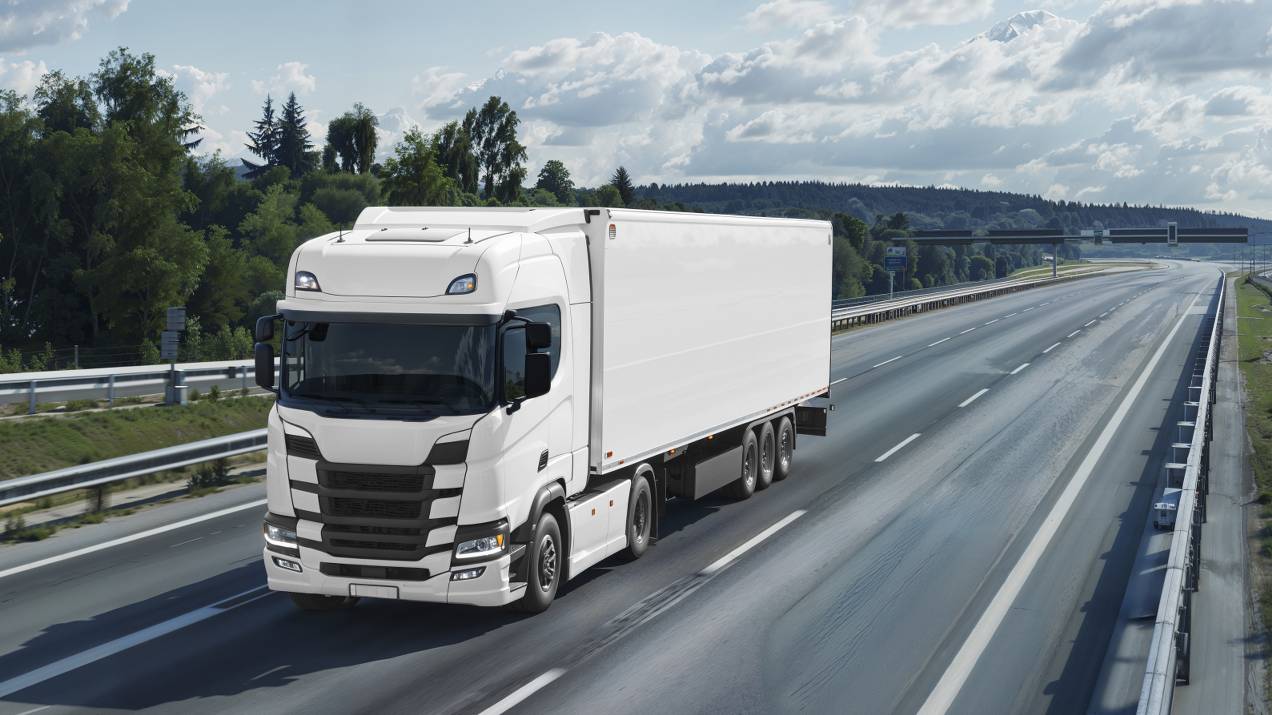
Road Freight Transport in Colombia: Key Routes, Transit Times and Rates 2026
Road freight transport is the final link —and often the most critical one— in the logistics chain of any Colombian company that imports, exports, or distributes goods within the country. Once the container arrives at the port or the merchandise leaves the production plant, it is the truck that determines whether the product arrives on time, in what condition, and at what cost.
This guide presents the most important road freight routes in Colombia, real transit times, reference rates for 2026, and the factors you should understand to optimize this component of your logistics operation.
Road Transport in the Colombian Logistics Chain
Colombia moves approximately 73% of its domestic cargo by road, according to data from the Ministry of Transport. This dependence on road transport is explained by the country's geography: the main industrial cities —Medellín, Bogotá, Cali, Barranquilla, and Bucaramanga— are connected to each other and to the ports mainly through the national road network.
For companies importing general cargo, road transport represents the final leg of the operation: from the port of Buenaventura, Barranquilla, or Cartagena to the importer’s plant or warehouse. For exporting companies, it represents the first leg: from the production plant to the shipping port. In both cases, this cost and transit time are critical for the competitiveness of the operation.
Types of Vehicles for Road Freight in Colombia
The choice of vehicle type depends on the volume, weight, dimensions, and characteristics of the merchandise. These are the main types used for general cargo in Colombia:
| Vehicle Type | Load Capacity | Typical Use | Notes |
|---|---|---|---|
| Single truck | 5 – 8 tons | Urban and regional distribution, medium loads | Access to areas with limited entry for large vehicles |
| Turbo truck (NPR / NQR) | 3 – 5 tons | Urban distribution, last-mile deliveries | Agile in cities, low cost for small volumes |
| Tractor-trailer (20' container) | 20 – 22 tons | Container transport from ports | Standard for maritime imports and exports |
| Tractor-trailer (40' container) | 24 – 28 tons | Large container transport from ports | Requires routes with sufficient height clearance |
| Double rear axle truck | 30 – 35 tons | Bulk cargo, heavy construction materials | Permits may be required on some road segments |
| Flatbed or low-bed trailer | 20 – 40 tons | Industrial machinery, oversized equipment | May require special permits and escort vehicles |
| Refrigerated truck | 5 – 20 tons | Products requiring cold chain | Not applicable for dry general cargo |
Main Routes and Transit Times in Colombia
The following are the most commonly used road freight routes in Colombia for the movement of general cargo, with estimated transit times under normal conditions. Transit times may increase due to factors such as truck driver strikes, road closures caused by landslides or maintenance, and heavy traffic during peak seasons.
Routes from the Port of Buenaventura
Buenaventura is Colombia’s most important port on the Pacific Ocean and the main entry point for imports from Asia, especially China. It handles approximately 60% of the country’s maritime foreign trade.
| Route | Approximate Distance | Transit Time | Notes |
|---|---|---|---|
| Buenaventura → Cali | 130 km | 4 – 6 hours | Relatively short route, but with mountainous sections |
| Buenaventura → Medellín | 470 km | 12 – 18 hours | High-traffic route, includes passage through Cali and Las Américas highway |
| Buenaventura → Bogotá | 560 km | 14 – 20 hours | One of the highest-volume routes in the country |
| Buenaventura → Pereira | 280 km | 7 – 10 hours | Important route for the Coffee Region |
| Buenaventura → Manizales | 370 km | 9 – 13 hours | Crosses the Central mountain range with mountainous segments |
| Buenaventura → Barranquilla | 1,150 km | 28 – 38 hours | Long route, usually requiring an overnight stop |
Routes from the Port of Barranquilla
Barranquilla is the main port on the Caribbean Sea and the most commonly used entry point for imports from the United States, Europe, and the Caribbean. The Magdalena River also operates as a complementary inland waterway.
| Route | Approximate Distance | Transit Time | Notes |
|---|---|---|---|
| Barranquilla → Medellín | 700 km | 10 – 14 hours | Route along the Troncal de Occidente highway, relatively flat in the first half |
| Barranquilla → Bogotá | 1,050 km | 14 – 18 hours | One of the longest routes in the north-south corridor |
| Barranquilla → Cartagena | 130 km | 2 – 3 hours | Short route via the coastal highway, very frequent |
| Barranquilla → Bucaramanga | 560 km | 9 – 12 hours | Important corridor for the northeast of the country |
| Barranquilla → Cali | 1,180 km | 18 – 24 hours | Long trip requiring planned stops |
Routes from the Port of Cartagena
Cartagena hosts the port terminal with the highest container throughput in the country and is an important regional transshipment hub. It receives cargo from multiple origins and serves as an alternative to Barranquilla for the Caribbean corridor.
| Route | Approximate Distance | Transit Time | Notes |
|---|---|---|---|
| Cartagena → Medellín | 660 km | 10 – 14 hours | Similar route to Barranquilla–Medellín with a detour through Planeta Rica |
| Cartagena → Bogotá | 1,010 km | 14 – 18 hours | High-volume corridor, passing through Bucaramanga or the Magdalena Medio region |
| Cartagena → Barranquilla | 130 km | 2 – 3 hours | Very frequent route via the coastal highway |
| Cartagena → Bucaramanga | 620 km | 10 – 14 hours | Route through the Magdalena Medio region |
Internal Routes Between Major Cities
| Route | Approximate Distance | Transit Time | Notes |
|---|---|---|---|
| Bogotá → Medellín | 415 km | 8 – 12 hours | Route through the La Línea Tunnel, extremely high-volume corridor |
| Bogotá → Cali | 460 km | 9 – 13 hours | Route along the Pan-American Highway with mountain sections |
| Bogotá → Bucaramanga | 390 km | 7 – 10 hours | Passes through the Chicamocha Canyon |
| Medellín → Cali | 410 km | 8 – 12 hours | Southwestern Colombian corridor |
| Medellín → Bucaramanga | 530 km | 10 – 14 hours | Route through Puerto Berrío and the Magdalena Medio region |
| Cali → Pasto | 390 km | 8 – 12 hours | Mountain route with complex sections |
Road Freight Transport Rates in Colombia 2026
Road freight rates in Colombia are referenced by the Freight Table of the Ministry of Transport, which establishes minimum values per ton depending on the route and vehicle type. However, actual market rates may vary above these minimums depending on vehicle supply and demand, the season, and route conditions.
The following are reference rate ranges for 2026 on the most commonly used routes for containerized general cargo:
Rates for 20' Container Transport (Tractor-Trailer)
| Route | Estimated Rate (COP) | Estimated Rate (USD) |
|---|---|---|
| Buenaventura → Cali | COP 1,500,000 – COP 2,500,000 | USD 365 – USD 610 |
| Buenaventura → Medellín | COP 3,000,000 – COP 4,500,000 | USD 730 – USD 1,097 |
| Buenaventura → Bogotá | COP 3,500,000 – COP 5,000,000 | USD 854 – USD 1,220 |
| Barranquilla → Medellín | COP 2,500,000 – COP 3,800,000 | USD 610 – USD 927 |
| Barranquilla → Bogotá | COP 3,000,000 – COP 4,200,000 | USD 730 – USD 1,024 |
| Cartagena → Medellín | COP 2,800,000 – COP 4,000,000 | USD 683 – USD 976 |
| Cartagena → Bogotá | COP 3,200,000 – COP 4,500,000 | USD 780 – USD 1,097 |
| Bogotá → Medellín | COP 2,200,000 – COP 3,500,000 | USD 537 – USD 854 |
| Bogotá → Cali | COP 2,500,000 – COP 3,800,000 | USD 610 – USD 927 |
Rates for 40' Container Transport (Tractor-Trailer)
| Route | Estimated Rate (COP) | Estimated Rate (USD) |
|---|---|---|
| Buenaventura → Cali | COP 2,000,000 – COP 3,500,000 | USD 488 – USD 854 |
| Buenaventura → Medellín | COP 4,000,000 – COP 6,000,000 | USD 976 – USD 1,463 |
| Buenaventura → Bogotá | COP 4,500,000 – COP 6,500,000 | USD 1,097 – USD 1,585 |
| Barranquilla → Medellín | COP 3,500,000 – COP 5,200,000 | USD 854 – USD 1,268 |
| Barranquilla → Bogotá | COP 4,000,000 – COP 5,800,000 | USD 976 – USD 1,415 |
| Cartagena → Medellín | COP 3,800,000 – COP 5,500,000 | USD 927 – USD 1,341 |
| Cartagena → Bogotá | COP 4,200,000 – COP 6,000,000 | USD 1,024 – USD 1,463 |
Note: rates are expressed in COP with a reference exchange rate of COP 4,100 per dollar. Values are estimated market ranges for 2026 and may vary depending on transporter conditions, road conditions, vehicle availability, and commercial agreements with the logistics operator.
Factors That Affect the Cost and Time of Road Transport
Road Infrastructure Conditions
Colombia has made significant progress in the construction of fourth-generation highways (4G), which are reducing transit times in several key corridors. However, some routes still have segments in poor condition, especially during rainy seasons when landslides and closures are frequent. The Buenaventura–Buga corridor, Bogotá–Villavicencio highway, and certain Andean segments are historically the most prone to interruptions.
Traffic Restrictions
Heavy cargo vehicles have circulation restrictions at specific times and days in Colombia’s main cities. Medellín, Bogotá, and Cali have truck traffic restrictions during peak hours. Additionally, during long holiday weekends and high tourism seasons, some highways implement additional restrictions for cargo vehicles. These restrictions must be considered when calculating delivery times.
Vehicle Availability
During periods of high demand such as the last quarter of the year before the Christmas season, the availability of tractor-trailers for container transport may decrease and rates may increase. Planning ahead and working with a logistics operator that has its own fleet or fixed contracts with transport companies reduces this risk.
Cargo Weight and Dimensions
For merchandise that exceeds legal axle weight limits or standard cargo dimensions, special transport permits must be obtained from INVIAS or the relevant transit authorities. This applies especially to large industrial machinery. Permits can take between 2 and 5 business days to obtain and generate additional costs ranging from COP 500,000 to COP 2,000,000 depending on the route and type of cargo.
Insurance and Civil Liability
Road transporters in Colombia must have contractual civil liability insurance covering the cargo they move. For high-value or delicate goods, the importer may also purchase an additional inland transport insurance policy. The cost ranges between 0.3% and 0.8% of the value of the transported goods.
Tips to Optimize Your Company’s Road Freight Transport
- Choose the entry port closest to your final destination: although Buenaventura has the lowest maritime freight rates from Asia, if your plant is in Bogotá or on the Atlantic Coast, the addition of road transport may make Barranquilla or Cartagena more cost-effective in total door-to-door cost.
- Consolidate your shipments: if you have multiple shipments each month, coordinating arrival dates to move them within the same week can reduce the cost per trip by negotiating volume with the transporter.
- Plan ahead for high-demand seasons: in the fourth quarter of the year and during Holy Week, vehicle availability drops and prices rise. Booking 2 or 3 weeks in advance can secure both price and availability.
- Check road restrictions before dispatch: consulting the road status on the INVIAS portal before scheduling a trip can prevent surprises due to closures or active restrictions along the route.
- Work with an integrated logistics operator: when the same provider manages customs brokerage and road transport, coordination between cargo release at the port and vehicle dispatch is immediate, avoiding unnecessary storage days between procedures.
- Request transporter documentation: verify that the vehicle and driver have all required documents up to date: SOAT insurance, mechanical inspection certificate, proper driver’s license category, and valid cargo manifest.
Road Transport for Machinery and Oversized Cargo
Companies in the manufacturing and construction sectors frequently need to transport large industrial machinery whose dimensions or weight exceed normal cargo standards. In these cases, special conditions apply:
- Required vehicle: low-bed trailer, cradle trailer, or extendable platform depending on equipment dimensions.
- Special transport permit: processed through INVIAS or the competent authority, including a detailed description of dimensions, axle weight, and route to be used.
- Road escort: mandatory for loads exceeding certain width or length limits. Escort costs are added to the freight value.
- Schedule restrictions: oversized loads generally may only circulate at night or during specific time windows to minimize traffic impact.
- Route survey: for large loads it is recommended to conduct a preliminary route survey to identify bridges, tunnels, or sections with restricted height or width.
Frequently Asked Questions About Road Freight Transport in Colombia
How much does it cost to transport a 20-foot container from Buenaventura to Medellín?
The cost of transporting a 20-foot container from the port of Buenaventura to Medellín ranges between COP 3,000,000 and COP 4,500,000 in 2026, depending on the transporter, vehicle availability, and route conditions. The journey takes between 12 and 18 hours under normal conditions.
What happens if the route is closed due to a landslide?
Road closures caused by landslides are common in Colombia, especially during the rainy season in the Andean corridors. When a closure occurs, the transporter must wait for the road to reopen or take an alternate route, which can extend transit time by 6 to 48 hours depending on the severity of the event. For this reason, it is always recommended to include additional time margins in delivery planning.
Is the road transporter responsible if the cargo is damaged?
Yes. Road transporters in Colombia have contractual civil liability for the cargo they move, as established by the Colombian Commercial Code. However, this liability has limits and exclusions. For high-value or fragile goods, it is recommended to purchase an additional inland transport insurance policy that extends coverage beyond the transporter’s basic liability.
What are the truck circulation restrictions in Bogotá?
In Bogotá, heavy cargo vehicles have circulation restrictions on weekdays between 6:00 a.m. and 9:00 a.m., and between 4:00 p.m. and 8:00 p.m. on main roads. These restrictions may change, so it is advisable to verify the current regulations of the District Mobility Secretariat before scheduling cargo entry into the city.
Is it possible to track the vehicle transporting my cargo in real time?
Yes. Modern logistics operators offer real-time GPS tracking systems that allow clients to know the exact location of the vehicle throughout the journey. This service is especially valuable for high-value cargo or for operations where delivery times are critical for the client’s production or distribution.
Conclusion
Road freight transport in Colombia is a key component of the logistics chain that directly impacts operating costs, delivery times, and the competitiveness of any company that imports, exports, or distributes goods. Understanding the main routes, real transit times, and the applicable rate ranges for 2026 allows companies to better plan operations, avoid unexpected costs, and make informed decisions about which port of entry or transport modality is most convenient for each shipment.
At Nextstop Group, we coordinate road transport as part of an integrated logistics service that includes international freight forwarding and customs brokerage. This means that from the moment your container is released at the port, the vehicle is already scheduled for transport to your plant without delays or additional storage costs. If you want to request a quote for the road transport of your next import or export shipment, contact us and we will respond in less than 24 hours.
